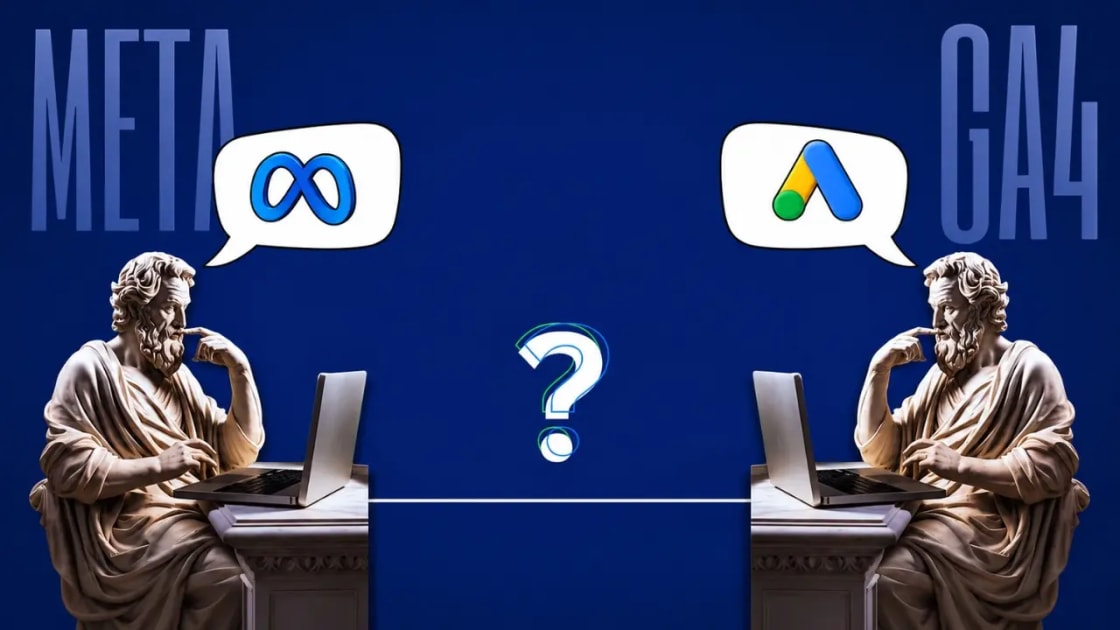
If you've ever sat in a marketing meeting and watched two people argue about whether to put next quarter's budget into Google or Meta, you know how quickly this conversation can turn into a debate.
Someone swears by Google because "people are already looking for what we sell." Someone else swears by Meta because "our best customers came from an Instagram ad three years ago and we never looked back." Both of them are right. Both of them are also missing half the picture.
You'll hear this debate called a lot of things Google Ads vs Facebook Ads, Google Ads vs Meta Ads, take your pick. The names have shifted a bit over the years as Meta rebranded, but the underlying question hasn't changed: where does your PPC advertising budget actually work harder?
I've run campaigns on both platforms for years, and honestly, most of what I know came from just being in the trenches testing, breaking things, and fixing them again. If you'd rather learn this in a structured way instead of trial and error, Zia EdTech runs hands-on training that covers exactly this kind of platform strategy. If there's one thing I've learned, it's that asking "which one is better" is the wrong question.
It's a bit like asking whether a hammer is better than a screwdriver. The answer depends entirely on what you're trying to build.
So instead of picking a winner and moving on, let's actually dig into how these two platforms work, why they behave so differently, and how you can figure out which one or which combination makes sense for your online advertising strategy.
Start With the User, Not the Platform
Here's the thing that gets lost in most comparisons: Google Ads and Meta Ads aren't really competing for the same moment in a customer's day. They're showing up at completely different points in someone's mindset.
When somebody opens Google and types "best waterproof hiking boots for wide feet," they're not casually browsing. They have a problem, and they're actively hunting for a solution right now.
That's intent. Google's entire business model is built around catching people in that exact moment and showing them something relevant before they even finish scrolling the results page.
Meta works from the opposite direction. Nobody logs into Instagram thinking "I hope I see an ad for hiking boots today." They're checking on a friend's vacation photos, watching a reel about pasta, or scrolling because they have five minutes to kill before a meeting.
An ad shows up not because they asked for it, but because Meta's algorithm has decided based on their age, location, interests, past behavior, and a hundred other signals that they might care.
So one platform captures demand that already exists. The other one plants a seed and hopes it grows into demand.
Neither approach is wrong. But confusing the two, or expecting one to behave like the other, is where a lot of ad budgets go to die.
What Google Ads Does Really Well
Let's talk about Google first, since it's usually the platform people reach for when they want something measurable and fast.
Intent is everything
The obvious advantage is intent. If someone searches "emergency plumber near me," they are not window shopping. They have a burst pipe and they need help in the next hour.
An ad that shows up at that moment doesn't need to convince anyone of anything it just needs to be there, be relevant, and make it easy to call or book.
This is why local service businesses, e-commerce stores selling well-known products, and B2B companies targeting specific software categories tend to do so well here. The customer has already done the hard part of deciding they want something. Your job is just to be visible when they go looking.
Google Ads targeting works differently from what you'll find on social platforms too. Instead of building an audience profile, you're bidding on the exact words someone typed, which is a much more direct and often more expensive way to reach a buyer.
More than just search
Google also isn't just search ads anymore, even though that's what most people picture. There's Shopping ads for retailers, Display ads for retargeting people who've already visited your site, and YouTube ads if you want video reach.
That range means you can actually follow someone through different stages of their decision, from the first spark of interest all the way to the moment they're ready to buy.
Cleaner tracking
The tracking side tends to be cleaner too. Because you're bidding on actual search terms, it's a lot easier to connect a dollar spent to a dollar earned.
You know exactly what someone typed before they clicked your ad, which makes reporting to a boss or a client considerably less painful.
Where it falls short
That said, Google isn't magic, and it isn't cheap in a lot of industries. Try running search ads for personal injury lawyers or mortgage refinancing and you'll watch your cost per click climb into territory that would make anyone wince.
Competitive keywords are competitive precisely because everyone else already figured out they convert well, and that competition drives prices up fast.
There's also a ceiling problem. Google Ads only works if people are actually searching for what you sell. If you've built something genuinely new a product category that doesn't have an established name yet, or a service nobody's thought to Google because they don't know it exists there's no search volume to bid on.
You can't capture demand that hasn't formed yet. That's a real limitation, and it's one reason startups with novel products often struggle to make Google their primary channel early on.
And because search ads are mostly text and shopping listings, Google isn't the place to build an emotional connection with your brand. It answers questions. It doesn't tell stories.
What Meta Ads Does Really Well
This is where Meta earns its keep. If Google is about answering a question someone already asked, Meta is about asking the question for them or more accurately, showing them something so compelling they didn't realize they needed it.
Targeting that actually works
Meta Ads targeting is genuinely impressive. You can build audiences around age, location, interests, life events, past purchase behavior, or lookalikes modeled directly off your existing best customers.
That last one in particular tends to surprise people the first time they use it feeding Meta a list of your top buyers and having it find thousands of strangers who behave similarly online. It's not perfect, but when it works, it works well.
Built for visual products
Meta is also, frankly, a much better home for visual products. A pair of shoes, a piece of furniture, a skincare routine, a meal kit these are things people respond to emotionally when they see them in motion.
A well-shot video or a scroll-stopping carousel ad does something a text link in a search results page simply can't. It shows the product being used, worn, or enjoyed, and that's often the nudge someone needs to go from "huh, that's cool" to "I want that."
Cheaper reach, easier impulse buys
When people compare Google Ads vs Meta Ads cost, this is usually where Meta pulls ahead. For pure awareness and top-of-funnel reach, Meta often comes in cheaper than fighting for competitive Google keywords. You're not bidding against every other business trying to rank for the same three words you're paying to reach an audience, and that audience can be enormous.
Meta also shines for impulse buys. Somebody wasn't planning to buy a new coffee mug today, but the ad caught them at the right moment with the right image, and now they're checking out. That's a very different kind of sale than the one Google captures, but it's real revenue all the same.
Where it falls short
Of course, Meta has its own headaches. Because you're reaching people earlier in their decision-making process, the path from ad to purchase tends to be longer and murkier.
Someone might see your ad three times over two weeks before they actually buy, which makes attribution trickier than it used to be especially since Apple's privacy changes made it harder to track users across apps and websites the way advertisers could a few years ago.
Then there's creative fatigue. Run the same ad to the same audience for too long and performance quietly declines. People get bored, they stop noticing it, or worse, they start actively scrolling past it.
That means Meta campaigns need a steady supply of fresh creative, which is a real cost in time and resources that a lot of businesses underestimate when they're budgeting.
So Which One Should You Actually Use?
There's no single best advertising platform that works for every business honestly, the answer depends on where your business is right now, not on which platform has the flashier reputation this year.
If you lean toward Google
If people are already searching for what you offer, lean into Google. This applies to almost anything with established demand: plumbers, dentists, accounting software, flight bookings, insurance quotes.
You don't need to convince anyone that they need a plumber when their basement is flooding. You just need to be the plumber they find first.
If you lean toward Meta
If your product needs to be seen to be understood, or if you're trying to build a brand rather than just close a sale, Meta is probably your better starting point.
This is especially true for newer companies or products that don't have an obvious search term attached to them yet. Nobody's googling your brand name if they've never heard of it. Someone has to introduce it to them first, and that's exactly what a good Meta campaign does.
If you can afford both
And if you've got the budget to do both, that's often where the real magic happens. A lot of the smartest advertisers I've worked with don't pick a side at all.
They use Meta to introduce their product to the right audience, build some familiarity, and get a name lodged in someone's head. Then, a week or two later, when that same person finally sits down and searches for the product by name or for the category it belongs to Google Ads is there to close the loop and capture the sale.
That one-two punch tends to outperform either platform running alone, because it mirrors how people actually make decisions. Nobody sees an ad once and buys immediately.
They see something, think about it, maybe forget about it for a few days, and then go looking when they're finally ready. If you've only got a presence on one platform, you might be invisible during the exact moment that matters.
A Note on Testing Before You Commit
One mistake I see a lot of businesses make is treating this decision as permanent. They pick a platform, sink the entire quarter's budget into it, and only find out three months later whether it actually worked. That's a slow and expensive way to learn.
Give it a fair trial
A better approach is to treat your first month or two on either platform as a test, not a verdict. Start with a modest budget, and run it long enough to get real data a couple of weeks at minimum, since both platforms need time to optimize delivery.
Then look honestly at the numbers. Not just clicks and impressions, but actual cost per lead or cost per sale, since that's what really tells you about Google Ads vs Meta Ads ROI. Vanity metrics feel good in a report, but they don't pay the bills.
Judge each platform fairly
It also helps to be honest about what you're actually testing. If you run a Meta campaign for two weeks and it doesn't produce direct sales, that's not necessarily a failure.
Meta was likely doing its job at the top of the funnel building awareness even if the sale itself showed up somewhere else, like a direct search a few weeks later. This is exactly why so many businesses underestimate Meta's value: they judge it purely on last-click conversions, when its real contribution often shows up indirectly.
Google, on the other hand, is usually easier to judge quickly because the intent is already there. If your cost per click is reasonable and people are searching for your exact product but still not converting, that's less about the platform and more about your landing page, your offer, or your pricing.
Don't blame the ads for a problem that lives somewhere else in the funnel.
The point is: give each platform a fair, time-boxed trial, track the right numbers, and resist the urge to declare a winner after three days and a few hundred dollars in spend. Both platforms reward patience and punish impatience in almost equal measure.
The Bottom Line
There's no universal champion between Google Ads and Meta Ads, no matter how confidently someone in a marketing meeting insists otherwise. Like most digital advertising decisions, it comes down to understanding where your customer actually is in their decision-making journey and matching the platform to that moment.
If your customers already know what they want and just need to find you, Google will usually get you there faster and with cleaner numbers to show for it.
If you're trying to get in front of people before they've even realized they have a need, Meta is where you plant that seed.
And if you've got room in the budget, running both isn't overkill it's often the smartest move you can make, letting each platform do the job it was actually built for instead of forcing one to do the work of two.
If you want to go deeper than a single blog post can take you actually running campaigns, reading the analytics, and understanding both platforms hands-on Zia EdTech's Digital Marketing with AI course covers Google Ads and Meta Ads in detail, along with the AI tools that are reshaping how both platforms are managed today.